💡 Planning a bulk purchase? Review our PE Woven Fabric Roll options and send the required GSM, width, roll length, lamination, color, quantity and destination through the bulk quotation form.
Woven plastic fabric (also known as woven polypropylene fabric, woven geotextile, or tarpaulin base fabric) is a textile-like material manufactured from flat tapes (slit films) or monofilaments of polypropylene (PP) or polyethylene (PE). The tapes are woven on circular or flat looms to form a stable, high-strength sheet. The material is supplied in roll form (woven fabric rolls) and is widely used in packaging, construction, agriculture, transportation, and geotechnical engineering.
1. Definition
Woven plastic fabric is produced by extruding PP or PE resin into a thin film, slitting the film into tapes (typically 2–5 mm wide), and stretching the tapes at elevated temperature to orient the polymer molecules. This orientation greatly increases tensile strength. The oriented tapes are then woven on looms in a plain weave (or other weaves) to create a fabric with high strength-to-weight ratio.
The fabric is usually delivered as a roll. Depending on the application, it can be used as-is (uncoated) or further processed by lamination (coating), printing, slitting, or bag-making.
2. Raw Materials
Polypropylene (PP) Woven Fabric
- Properties: High tensile strength, good creep resistance, low moisture absorption, relatively stiff handle.
- Elongation at break: typically 12–25 %.
- Melting point: ~160–170 °C.
Polyethylene (PE) Woven Fabric
- Properties: Softer, more flexible, better low-temperature impact resistance than PP. Ideal for heavy-duty outdoor tarpaulins and ground covers.
- Elongation at break: typically 15–30 %.
- Melting point: ~120–130 °C.
Additives
- UV stabilizers (carbon black or HALS): required for outdoor applications (>6 months exposure).
- Flame retardants: for scaffolding protection fabrics, event tents.
- Antistatic agents: for FIBCs used in explosive dust environments.
- Color masterbatches: for coloured fabrics (green, blue, black, etc.).
3. Manufacturing Process
The production of woven plastic fabric involves two main stages: tape (flat yarn) extrusion and weaving.
3.1 Tape (Flat Yarn) Production
- Extrusion: PP or PE resin is melted (190–250 °C) and extruded through a flat die to form a thin film.
- Quenching: The film is rapidly cooled in a water bath to set the amorphous structure.
- Slitting: The film is cut into narrow tapes (slit film tapes) of a defined width (e.g., 2.5 mm, 3.5 mm).
- Stretching (orientation): Tapes are heated (120–150 °C) and stretched 4–8 times their original length. This aligns the polymer molecules, greatly increasing tensile strength.
- Annealing (heat setting): The stretched tapes are relaxed at elevated temperature to reduce shrinkage.
- Winding: The finished tapes are wound onto spindles (bobbins) for the weaving stage.
3.2 Weaving
- Circular looms: Produce tubular fabric (no side seam). Used for woven sacks, FIBC body fabric, and certain geotextiles.
- Flat looms (water-jet or rapier): Produce open-width (flat) fabric. Used for wide tarpaulins, geotextiles, and coated banner substrates.
Weave density (ends per inch / picks per inch) and tape width are adjusted to achieve the required GSM and mechanical properties.
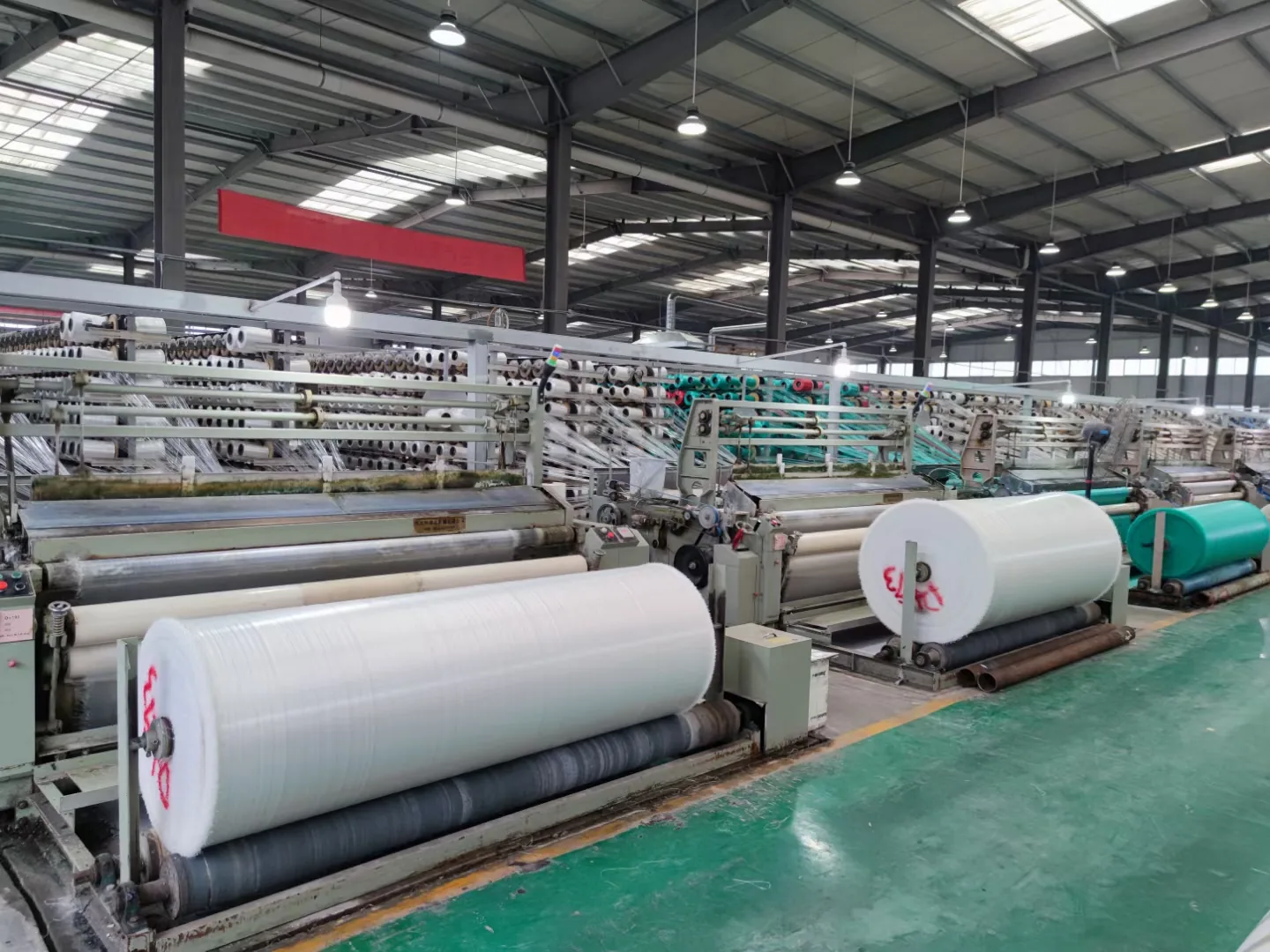 Figure 1: Partner manufacturing workshop reference showing woven roll production equipment.
🏭 Production Capability Review We coordinate enquiries with selected manufacturing partners and review available loom type, width, weave density, color, lamination and additive requirements against each project specification. 👉 Send Your Specifications for Feasibility and Quotation Review
3.3 Post-Processing
- Lamination (coating): PE or PP film is extruded onto one or both sides of the fabric. Lamination provides waterproofing, dust-tightness, and improved printability.
- Printing: Flexographic printing for logos, handling instructions, or branding.
- Slitting: Cutting wide rolls to narrower widths.
- Bag conversion: For woven sacks: tubular fabric is cut, one end is sewn or heat-sealed. For FIBCs: panels are cut and sewn together with lifting loops and filling spouts.
4. Classification
| Category | Sub-type | Description |
|---|---|---|
| By material | PP woven | High strength, more rigid, lower creep |
| PE woven | Softer, better cold-temperature performance | |
| By surface treatment | Uncoated (unlaminated) | Permeable (air, water), used for weed mat, sandbags, ordinary sacks |
| Coated (laminated) | Waterproof, dust-proof, used for tarpaulins, cement bags, FIBCs with barrier | |
| By weaving form | Flat (open-width) | Single-layer sheet, width up to 8 m |
| Tubular (circular) | Seamless tube, flattened into rolls, ideal for sack and bag making | |
| By weave pattern | Plain weave | Most common; high stability, moderate elongation |
| Twill weave | Slightly softer, better drape, less common |
5. Key Technical Specifications
| Property | Test Method | Typical Range / Requirement |
|---|---|---|
| GSM (mass per unit area) | ISO 9864 / ASTM D5261 | 40 – 300 g/m² |
| Weave density | Count per 10 cm | Warp & weft: 20–60 ends/10 cm |
| Tensile strength (grab) | ASTM D4632 | ≥ 900 N (separation) to ≥ 1350 N (stabilisation) |
| Wide-width tensile strength | ASTM D4595 / ISO 10319 | ≥ 18 kN/m (separation); ≥ 22‑36 kN/m (stabilisation) |
| Elongation at break | ASTM D4595 / ISO 10319 | 12–25 % (woven PP typical) |
| CBR puncture resistance | ASTM D6241 | ≥ 1.5 kN (separation); ≥ 2.4 kN (stabilisation) |
| Apparent opening size (AOS) | ASTM D4751 | O₉₅ = 0.15 – 0.43 mm |
| UV stability (500 h) | ASTM D4355 | ≥ 70 % retained tensile strength |
6. Applications
6.1 Packaging
- Woven sacks (25‑50 kg): cement, fertiliser, rice, animal feed, chemicals.
- FIBC (Flexible Intermediate Bulk Containers) – “Big Bags” / “Tote bags”.
- Container liner bags: Large tubular fabric placed inside shipping containers for bulk powder transport.
6.2 Construction & Engineering
- Heavy-duty tarpaulins: Truck covers, flatbed tarps, building site covers.
- Woven geotextiles: Separation (prevents intermixing of subgrade soil and aggregate base), stabilisation, and reinforcement.
- Scaffolding protection fabric: flame-retardant, often with eyelets.
6.3 Agriculture & Horticulture
- Weed mat (ground cover): black, uncoated fabric that allows water and air but blocks light.
- Shade net (open-mesh woven fabric): provides adjustable shading for nurseries and greenhouses.
- Silage wrap (reinforced): woven scrim laminated with PE film; highly puncture-resistant.
6.4 Environmental & Public Works
- Landfill daily cover: heavy woven fabric (150‑200 g/m²) with carbon black to resist UV.
- Compost cover: breathable woven fabric for aerobic composting systems.
6.5 Transportation & Logistics
- Railway wagon tarpaulins: large format, high strength, grommets and rope hems.
- Automatic chain tarps for tipper trucks.
6.6 Geotechnical & Hydraulic Engineering
- Woven geotextile for road base stabilisation: placed beneath aggregate layers to reduce thickness requirement.
- Filter fabric for drains / weep holes (controlled AOS).
- Wrap-around filter for perforated pipes (soft or rigid).
7. Applicable Standards
| Region | Standard | Scope |
|---|---|---|
| China | GB/T 8946‑2013 | Plastic woven sacks – General technical requirements |
| China | GB/T 17689‑2008 | Geosynthetics – Plastic woven geotextile |
| USA / AASHTO | AASHTO M 288 | Geotextile specification for highway applications |
| Europe | EN 13249 | Geotextiles for road construction (CE marking) |
| International | ISO 10319:2015 | Wide-width tensile test |
| International | ISO 13438 | UV resistance screening test |
8. Technical Trends
- Recycled content: PP woven fabrics with up to 30-50% post-industrial or post-consumer recycled resin.
- Lightweight high-strength: 70‑80 g/m² fabrics now achieve tensile strengths previously requiring 100 g/m².
- Multi-layer co-extruded tapes: Core layer (recycled) with virgin skin layers to maintain UV resistance.
- Biodegradable woven fabrics: Experimental PLA-based flat tapes.
9. Selection Considerations for Global Sourcing
- Outdoor use (>6 months): UV stabilisation (≥ 70 % residual strength after 500 h accelerated test) is mandatory. Black fabric with 2‑3 % carbon black is the most cost-effective UV solution.
- Waterproofing: Use double-side laminated (coated) fabric. Do not laminate weed mat or drainage geotextiles – they require water permeability.
- Heavy lifting (FIBCs): Verify loop stitching and base reinforcement.
- Low-temperature environments: Prefer PE-based or PP/PE blend fabrics over 100 % PP to avoid brittleness.
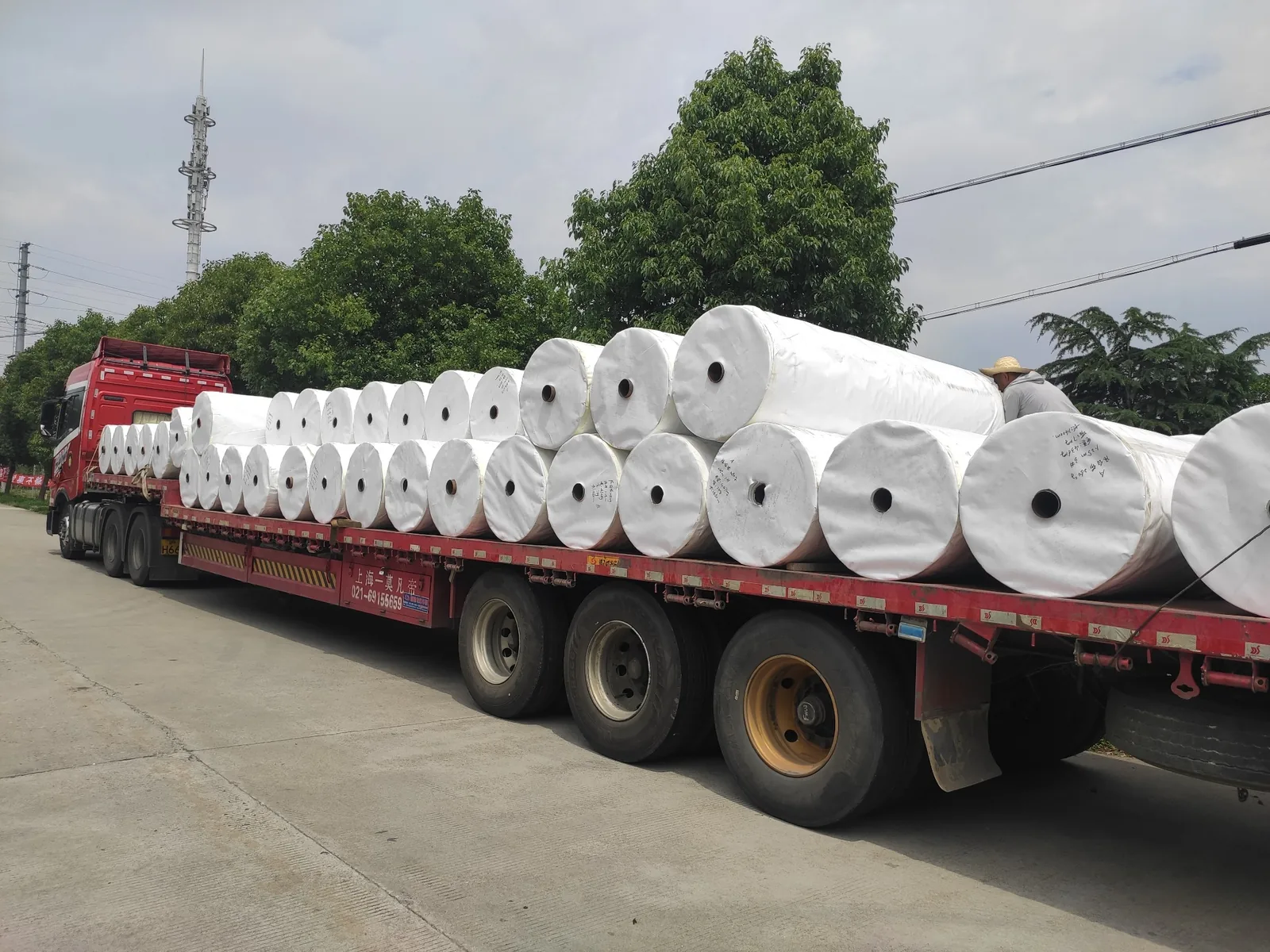 Figure 2: Bulk woven fabric rolls secured on a flatbed truck for dispatch reference.
10. Work with a Sourcing and Export Coordination Team
Technical and commercial requirements should be confirmed together before ordering. Our role is to review the buyer specification, coordinate suitable manufacturing options and organize the documentation and export details required for quotation.
Support can include:
- Specification review: material, GSM, width, roll length, weave density, lamination, UV requirement and color.
- Packing and loading coordination: roll wrapping, core selection, labels and container-loading requirements.
- Documentation discussion: available test reports, inspection requirements, packing lists and shipping documents should be confirmed for each order.
📩 Ready to discuss a project? Submit the application, target specification, quantity, packing method, destination port and trade term for review.
Send Your Bulk Sourcing Requirements
11. References
- AASHTO M 288‑21. Standard Specification for Geotextile Specification for Highway Applications. AASHTO, 2021.
- EN 13249:2016+A2:2021. Geotextiles and geotextile-related products for road construction. CEN.
- ISO 10319:2015. Geosynthetics – Wide-width tensile test. ISO.
- Koerner, R.M. (2012). Designing with Geosynthetics, 6th Edition. Xlibris.
- GB/T 8946‑2013. Plastic woven sacks – General technical requirements. Standards Press of China.